 ultimate-guide
What Makes Boutique Clothing Different: A 2026 Guide
Table of Contents
- What Is Boutique Clothing?
- Boutique Clothing vs. Regular Clothing: The Real Differences
- How to Tell If Clothes Are Good Quality
- Why Boutique Clothing Costs More (and When It's Worth It)
- How to Shop for Boutique Clothing Online
- What to Look For in a Boutique Piece: A Practical Checklist
- Conclusion
- Frequently Asked Questions
Last Updated: October 5, 2026
What Is Boutique Clothing?
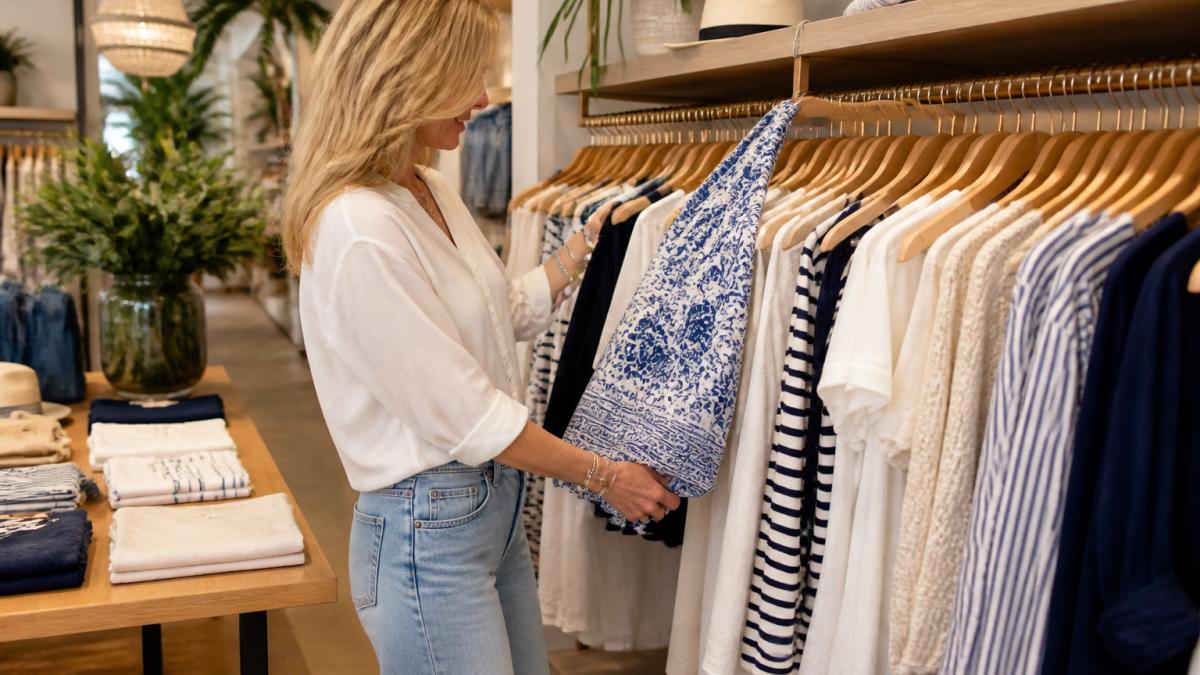
Boutique clothing is a limited, curated selection of apparel sold in small quantities by independent retailers, often featuring distinctive designs, premium fabrics, and personal styling support rather than mass-produced basics.
That distinction matters more than most shoppers realize. The Federal Trade Commission's guidance on textile and apparel labeling explains the labeling rules every garment must follow, which helps explain why boutique pieces often carry more detailed fabric and origin information than fast-fashion equivalents.
Boutique Clothing vs. Regular Clothing: The Real Differences
Boutique clothing differs from regular clothing in three ways: how it is selected, how much is produced, and how the customer is supported after the sale. Chain stores buy in bulk to hit a price point; boutiques buy in small batches to hit a standard.
Curation, Sourcing, and Small-Batch Production
A boutique buyer makes judgment calls a mass retailer cannot, selecting a limited number of pieces from independent designers and small-batch makers instead of stocking every size in every color.
That means fewer units, less repetition, and a real chance the woman next to you at dinner is not wearing your blouse.
The trade-off is real: small-batch production cannot match chain-store volume, so popular items sell out and restocking is not guaranteed.
Fit Support, Service, and the In-Store Experience
The service model is where boutiques separate themselves most. Staff typically know the inventory, the sizing quirks of each brand, and how a specific cut falls on different body types.
That fit support is hard to replicate in a large department store, where associates may cover several departments. For women who have struggled to find resort wear or occasion pieces that fit properly, that guidance often determines whether a purchase works or gets returned.
How to Tell If Clothes Are Good Quality
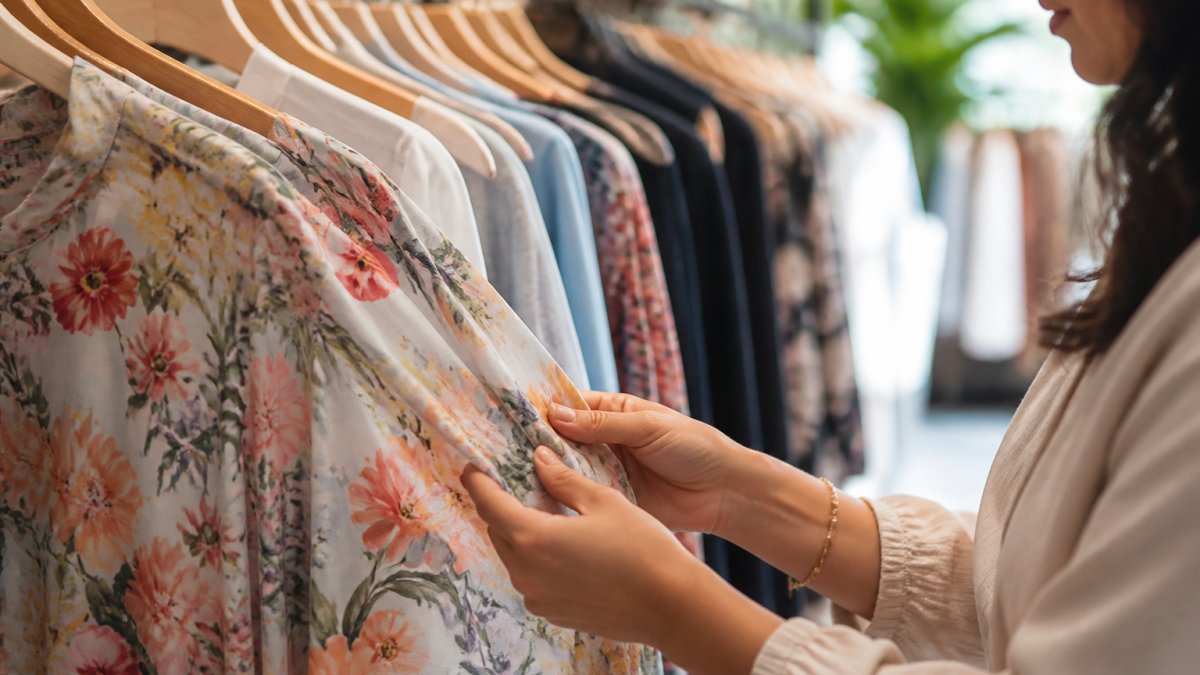
Good quality clothing shows itself in construction details long before it shows up in a price tag. A boutique label alone does not guarantee quality, and a chain-store label does not automatically mean poor quality.
Start With Fiber, Not the Label
Fiber content drives almost everything else about how a garment wears. Natural fibers like cotton, linen, silk, and wool breathe, drape, and age differently than synthetics like polyester, nylon, and acrylic.
The Federal Trade Commission's guidance on textile and apparel labeling requires fiber content and country of origin on most garments, so the information is there. Read it. A blouse listed as 100% silk behaves very differently from one listed as 95% polyester, 5% spandex, even if both feel smooth on the rack.
Read the Construction, Seam by Seam
Construction is where quality hides. Examine:
- Seam type: French seams enclose raw edges and are common in higher-end blouses and dresses. Bound seams finish the edge with fabric tape. Serged seams (the overlocked zigzag edge) are standard in mass production and not automatically bad, but they fray faster on lightweight fabrics.
- Stitch density: Look for tight, even stitching with no loose threads, skipped sections, or puckering. Puckering usually means the fabric was fed too fast or the tension was wrong.
- Buttons and closures: Buttons should feel solid and be securely attached. Cheap plastic buttons that wobble or have visible mold seams are a warning sign. Check that buttonholes are cleanly cut, not frayed.
Test Fit and Movement, Not Just Appearance
A garment can pass every visual check and still fail in the fitting room. Raise your arms, sit down, and bend forward. Check whether the shoulders pull, the waistband digs, and the fabric recovers its shape when you stand up. Knits that stay stretched out will bag out after a few wears.
Know What Longevity Actually Looks Like
Garment longevity comes down to three things: fiber durability, seam integrity, and how the piece is cared for. A cotton poplin blouse with French seams and secure buttons can last years with basic care. The American Chemical Society's textile fiber research notes that fiber content directly affects how a garment wears over time, which is why the care label deserves a real look, not a glance.
A Quick Reality Check on the Word "Boutique"
Boutique is a retail format, not a quality grade. Some boutiques carry exceptional small-batch garments; others carry the same imported pieces you would find online under a dozen other labels. The construction details above are the only reliable way to tell the difference.
Why Boutique Clothing Costs More (and When It's Worth It)
Boutique clothing costs more because of smaller production runs, higher-quality fabrics, and the labor behind independent design. You are paying for fewer units and more attention per garment, not for a logo. But that does not tell you whether a specific piece is worth its price.
What Actually Drives the Price Tag
Four cost factors separate a boutique garment from a chain-store equivalent:
- Order size: A mass retailer might order 50,000 units of a blouse, spreading design, pattern-making, and shipping costs across every unit. A boutique might order 50, so the same fixed costs land on far fewer garments.
- Fabric sourcing: Small-batch makers often buy from mills with minimum order quantities they can barely meet, so they pay more per yard than a factory buying in bulk. Premium fibers like silk, linen, and merino wool cost more at any volume.
- Labor: Independent designers and small workshops pay closer to fair wages than the lowest-cost overseas factories. That labor shows up in the price.
None of that guarantees a better garment. It explains why the price is higher, not whether it is justified.
The Cost-Per-Wear Math, Done Honestly
Cost per wear is the price divided by the number of times you actually wear the piece. A $149 blouse worn forty times costs roughly $3.70 per wear. A $40 top worn three times before it pills costs $13.33 per wear.
Lumiere Black Textured Contrast Trim Cardigan →
But the math only works if you are honest about the wear count. Most shoppers overestimate how often they will wear a statement piece.
When Boutique Pricing Is Not Worth It
Boutique pricing is not always worth it. Skip it for:
- Basic layering pieces you will wear hard and replace often, like plain tees and tank tops
- Trend-driven items you expect to wear for one season
- Pieces that need heavy alteration to fit, unless the boutique offers in-house alterations
Where boutique pricing earns its keep is in statement pieces you will wear repeatedly for years: a well-cut blouse, a distinctive jacket, a dress that fits without alteration.
How to Compare a Boutique Piece to a Chain-Store Alternative
Put the two side by side and ask four questions:
- Fiber content: Is the boutique piece a meaningfully better fiber, or the same blend with a nicer label?
- Construction: Are the seams, buttons, and lining actually better, or just different?
- Fit: Does the boutique piece fit you without alteration, or will you spend another $30 to $60 at a tailor?
- Wear plan: Can you name three outfits you will wear it with this season? If not, the cost-per-wear math collapses.
If the boutique piece wins on at least three of those four, the higher price is usually justified. If it only wins on the label, it is not.
Our Lumiere Black Textured Contrast Trim Cardigan at $89.99 is a good example: textured knit, contrast trim, gold-tone buttons, and a silhouette that works over a tank or buttoned on its own. It is the kind of piece that earns its price across dozens of outfits.

How to Shop for Boutique Clothing Online
Shopping for boutique clothing online works best when you treat fit and return policy as seriously as the design. Start with measurements, not sizes.
Most boutique sizing runs differently from mass-market brands, so compare your measurements against each product's size chart rather than assuming your usual number. Pay attention to the fabric description, since a viscose blouse and a cotton knit drape and fit very differently even in the same size.
A few habits that prevent disappointing orders:
- Read the return window and conditions before checkout, not after
- Check whether shipping is free above a threshold, which changes the real cost of a single-item order
- Look for detailed product photography showing the garment on a body, not just flat
At Petunias of Naples, we offer free shipping on orders over $100 and free, easy domestic returns, which takes most of the risk out of a first order. Our Aratta La Ville Rose Floral Blouse in White at $149.99 and the Parsley & Sage Artistic Patchwork Button Front Knit Top at $109.99 both list full fabric content and construction details, so you know what you are ordering before it arrives.

What to Look For in a Boutique Piece: A Practical Checklist
Use this checklist before buying any boutique piece, in store or online. It takes about two minutes and prevents most regret purchases.
- Fabric content is listed and suits the season and intended use
- Seams are tight and even, with no loose threads
- Buttons and closures feel secure and well attached
That last point on versatility is the one most shoppers skip. A boutique piece should be wearable in more than one context, which is why reversible and two-looks-in-one designs hold their value.
Conclusion
Finding boutique clothing that actually fits, lasts, and reflects your personal style takes more effort than clicking through a chain store's sale page. The payoff is a wardrobe of distinctive pieces you wear for years instead of a closet of replacements.
Petunias of Naples curates resort-chic women's apparel and accessories with exactly that in mind, both in store and online. You get free shipping on orders over $100, free and easy domestic returns, and a collection built around versatile pieces like our Artistic Knit Denim Style Jacket by Michael Tyler at $149.99, a lightweight, travel-friendly layer that moves from daytime to dinner.

Shop All and find your next favorite outfit.
Frequently Asked Questions
Are boutique clothes better quality?
Not automatically, but the odds are better. Boutiques typically buy in small batches from independent designers and small-batch makers, which often means tighter construction standards and fabrics chosen for how they drape and wear rather than for the lowest possible cost. That said, quality varies by brand, so check seams, buttons, and fabric weight yourself. At Petunias of Naples, pieces like the Aratta La Ville Rose Floral Blouse ($149.99) show the level of detail, from the embroidered back yoke to the scalloped hem, that separates boutique clothing from mass-market basics.
How is boutique clothing different from department store clothing?
Department stores buy deep: the same dress in every size, restocked for months. Boutiques buy shallow and specific. A boutique owner reviews each line in person, picks a handful of pieces that fit her customers, and often carries limited quantities that sell out rather than get marked down. You also get fit support from someone who knows the brands, plus a curated selection instead of aisles of near-identical options. The trade-off is fewer sizes per style and less frequent restocking.
How can you tell if boutique clothing is good quality?
Start with the seams: they should be tight, straight, and finished, not fraying. Check that patterns match at the side seams and that buttons are sewn on with real thread, not glued. Feel the fabric for weight and recovery. Look at the label for fiber content and care instructions. A piece like the Lumiere Black Textured Contrast Trim Cardigan ($89.99) shows what to expect: contrast trim at the neckline, placket, pockets, cuffs, and hem, plus gold-tone buttons, all details that cost more to produce and hold up longer.
What should you look for when shopping at an online clothing boutique?
Check the return policy first, then look for fit notes and fabric details on each product page. Photos from multiple angles help more than one styled shot. Read the size chart rather than assuming your usual size. If the boutique lists its brands and lets you filter by category, you can judge whether the selection matches your style. Petunias of Naples offers free shipping over $100, free Click & Collect, and easy domestic returns, which lowers the risk of a first order from a boutique you have not tried before.